

Let’s talk about expectations.
A meal at a new restaurant everyone you know has been raving about. The bucket list vacation you’ve dreamed of for as long as you remember. The musical festival you finally managed to get tickets for after years of trying.
All things you expect are going to blow your mind.
But, here’s the thing - the higher the expectation, the harder the fall if reality doesn’t measure up.
It’s why transformation projects in retail that are meant to feel like a five-star dinner end up tasting like a bad batch of microwaved noodles. The anticipation is huge. The investment is massive. But too often the outcome leaves everyone disappointed.
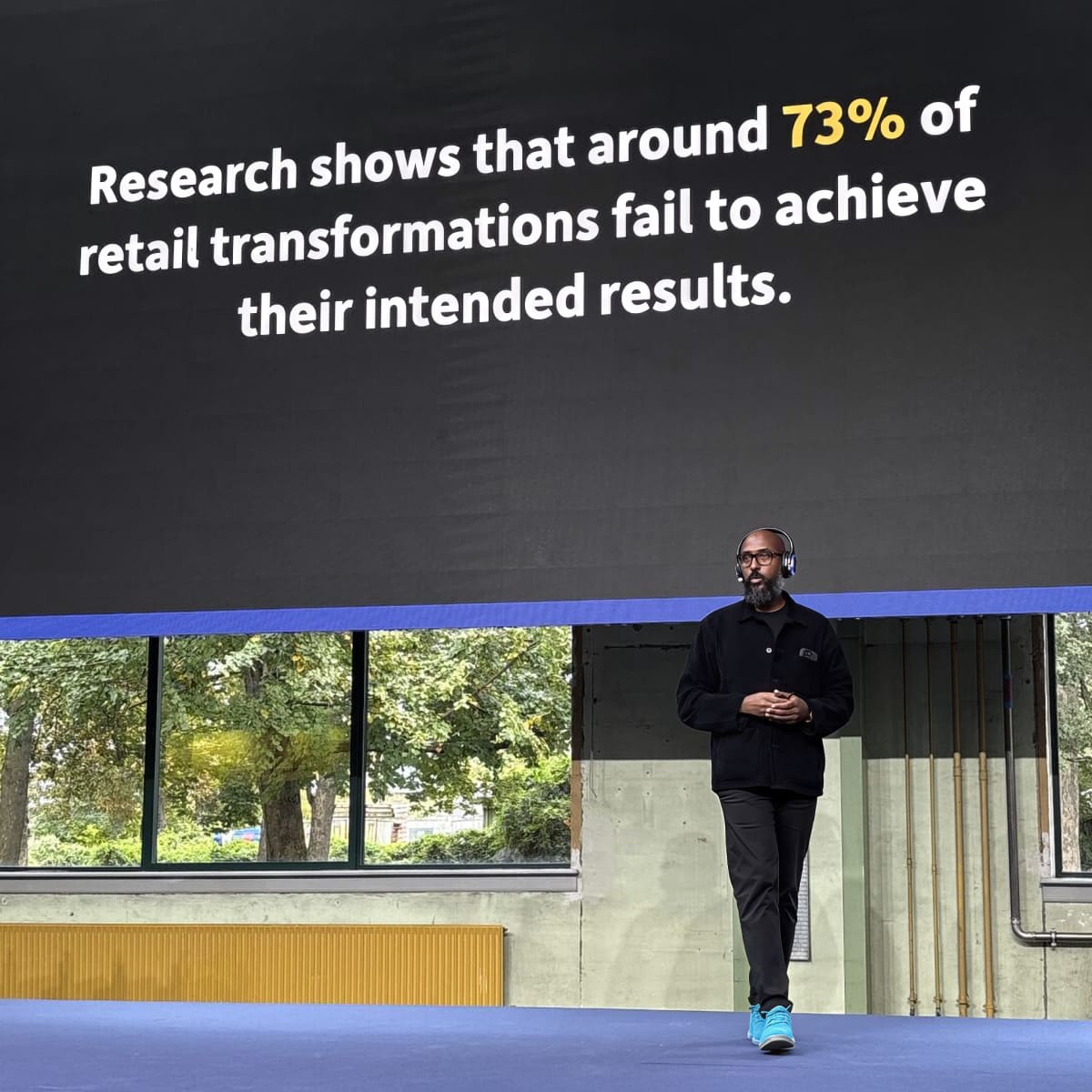
In fact, according to Mobarak Said, Business Technologist and former Head of IT and Digitalization at ILLUM, research from McKinsey & Company shows 73% of digital transformation projects fail to meet expectations or achieve their intended result.
Which begs the question, why? Why do so many fail?
“We’ve all heard about digital transformation,” says Mobarak. “But what we don’t hear enough about is why so many of these transformations fail or, at best, underdeliver. It comes down to a simple truth: when we disconnect people from change, we kill its potential.
73% of digital transformation projects fail to meet expectations not because the tech didn’t work - but because the people were never truly part of it. The people the tech were meant to serve were not included before the roll-out or involved in a very limited way.
Ignoring people and focusing purely on the tech is the single biggest reason why digital transformation fails.
Too often, transformation gets confused with technology upgrades. The sleek new platform becomes the headline, but the people using it are left behind. Retail transformation is really about behavioral change. The tech is just the enabler.
Disconnected transformations cost more than money. They cost adoption, trust, energy – and ultimately, customer experience.
Or as Mobarak Said explains: “You can’t deliver a modern CX with an outdated EX. If your employees aren’t empowered and engaged, your customers will feel it straight away.”
That’s why people-powered transformation isn’t a nice-to-have. It’s the difference between success and failure.
People-powered transformation
So how do you bring people into the process and make sure the transformation sticks?
According to Mobarak, it starts with some simple but powerful principles:
Involve store teams early. “Don’t just invite the usual voices during evaluation and pilot phases,” says Mobarak. “Spot the silent unicorns. The noisy ones will always speak – but the quiet ones hold years of untapped knowledge. Give them a safe space to share and you’ll unlock gold.”
Focus on intuitive tools. Choose tech that’s easy to learn and use. A familiar, mobile-first interface reduces training time and boosts adoption.
Connect tech to purpose. “Show clearly how new tools make the day-to-day easier,” says Mobarak. “When employees see how the tech improves their lives, they’ll naturally pass that on to customers.”
Empower local champions. Identify in-store “super users” who can lead by example and act as bridges between HQ and frontline. “Find someone your store teams trust and you’ll get feedback that actually matters,” adds Mobarak.
Design onboarding around real workflows. Skip the generic training manuals. Instead, train staff on the tasks they actually do every day – with scenario-based, practical examples.
Communicate often, clearly, and visually. Short updates, quick videos, and success stories from other stores go further than long emails no one reads.
Measure and celebrate quick wins. “Wins fuel positive energy,” says Mobarak. “Even small victories create curiosity, engagement, and momentum.”
Provide just-in-time support. In-app tips, quick video guides, and responsive support channels help reduce rollout friction.
Make feedback part of the process. Build structured ways for store teams to share what’s working and what’s not – and show them you’re listening by acting on it.
And Mobarak’s final piece of advice?
Be bold. Be ambitious. Choose a partner not just a supplier. Transformation isn’t just about upgrading systems. It’s about upgrading ambitions. Daring to lead, not follow.
Practicing what we preach - not just saying the right words.
“When people are connected, transformation succeeds. Because if you want to transform your business, you start with your people. Let’s go beyond tech swaps and quick fixes. Let’s create change that excites, empowers, and elevates both employees and customers.”
Want to dive deeper into how people-powered transformation can become a reality in your business?
You can connect directly with Mobarak Said here, or if you want to talk to us about how we put people first in every roll-out we do, we’d love to chat.
Last updated: februari 24, 2026