What happens to a customer after they've paid? Why has an entire industry built a beautiful post-purchase experience for one channel and almost none for the other? And what does it take to walk away from a good career because a shop wouldn't take back a pair of trousers?
To find the answers, it helps to speak to someone who turned a bad afternoon in a queue into a company.
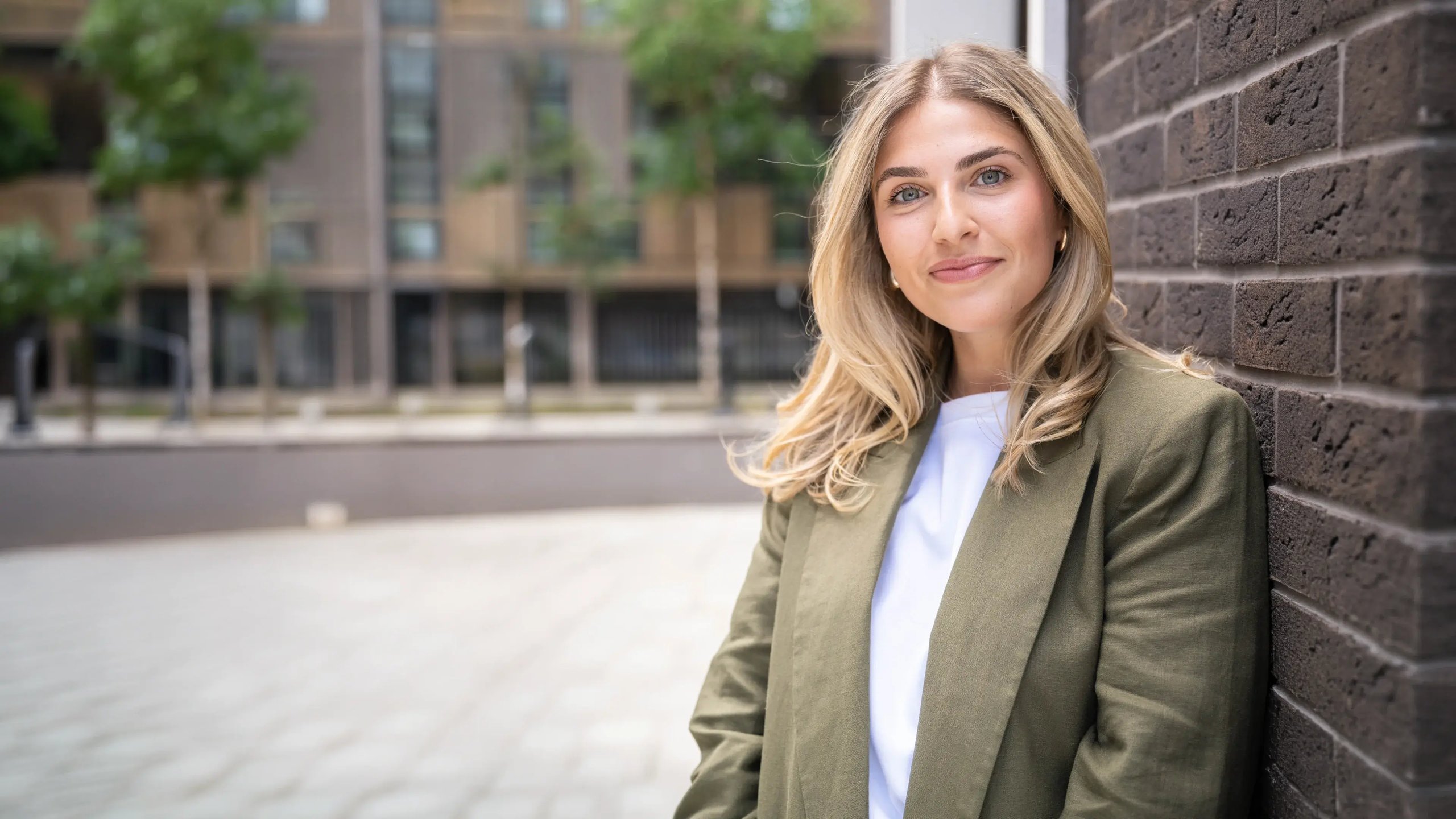
Tash Grossman is the founder and CEO of Slip. She went straight from university into management consulting, spending a couple of years in financial services before moving into retail - and four years ago she left it all to build a business around something almost every retailer treats as an afterthought.
The receipt.
Slip started with the simple fact that retailers know everything about their online customers and very little about the people standing in their stores. But the business that exists today is a long way from the one Tash pitched four years ago, and that evolution says a lot about where retail itself has moved.
The industry's attention has shifted from acquisition to retention.
And once you start thinking about the second purchase rather than the first, everything that happens after the transaction suddenly matters a great deal.
We talked to Tash about founding Slip, the fear of failure, what separate P&Ls are quietly doing to omnichannel retail, and what she'd tell retailers to fix first.
Tash, let's start with you. How did you end up running Slip?
I’ll dive straight in with the infamous origin story.
I was standing in a very well-known high street retailer trying to return a pair of trousers. I queued for half an hour, and then they wouldn't take them back because I'd lost my receipt.
It wasn't the first time that had happened to me. But that day it really hit a nerve, and I became absolutely obsessed with receipts.
A couple of months later, I got to the point where I thought, if I don't do this now, I'll really regret it. It was a big shift in thinking. I asked myself, what's the worst that could happen? The worst is that it fails, and at least I gave it a go.
So I quit my job. That was four years ago, and I've been running Slip ever since.
What was the scariest part?
As someone who grew up always pushing to be the highest achiever, the hardest thing was knowing the odds were against me from the start.
You know that most small businesses and startups fail. Add to that the fact that only around two percent of funding globally goes to female-led companies, and statistically you're set up to fail before you begin.
For someone who was absolutely terrified of failure, that was genuinely frightening.
But it's probably the thing I've grown the most on as an entrepreneur. Failure always leads to lessons learned. Failing fast and learning quickly is a really important part of building a startup. As someone who hates getting anything wrong, that took some undoing.
Slip started with receipts. Has the problem you're solving changed?
Receipts are still at the core of the business, but how it's evolved over four years has been quite substantial.
At the start, we were solving "I know everything about my online customer and very little about my in-store customer." That's a data acquisition problem, and receipts could solve it.
But the shift retailers have been on over the last five years has been from acquisition to retention. What was really important is that Slip went on that shift with them.
So for us now, the challenge we solve for retailers is all about improving the post-purchase experience and the customer retention that follows.
Making that shift (from purely focusing on data acquisition to helping brands improve wider challenges of loyalty and revenue growth) has been the most successful thing we've done, because retailers aren't focused on the acquisition problem anymore - there are other ways to solve that. They're focused on how they do more with less.
What makes me laugh is that yes, the business is still about receipts, but what we present today is wildly different from what we presented four years ago. And it wasn't an overnight pivot. It was lots of small evolutions that moulded us into where we are.
Is post-purchase experience the most forgotten area in retail?
In retail, no. In store, absolutely yes.
When you sit in a room full of retailers and say "post-purchase experience," they immediately go to the online journey after the buy button. That's what the technology was designed for. It was all about making your order confirmation email look nice, getting your tracking right, and reducing your "where is my order" complaints.
So the way we explain it is this - you have this entire post-purchase tech stack doing an amazing job of delivering value on one channel - and seventy percent of retail still happens in store.
That's the point where people start scratching their heads. We've designed a whole experience for the digital customer while the in-store customer, and more importantly the omnichannel customer, gets something subpar.
Customers don't care which channel they're shopping with you on. They're shopping with you because they like your brand and your product, and they expect the same experience either way.
It's great for us commercially, because it creates a real need for our product. But what actually happens after a customer buys something in a shop has been such an afterthought.
You sit right between physical and digital. Are retailers starting to see it as one channel?
Do you know what I actually think? It's a structural issue.
So many retail businesses are still run on separate P&Ls, and that's ultimately what creates the friction. When I've worked with retailers who operate as one business, the online-versus-store problem doesn't happen. But where online and in store have almost been brought up to compete with each other, you get a very obvious silo between channels.
And it's not just our product. Endless aisle, click and collect, ship from store - all of these omnichannel capabilities turn into a question about whose P&L it lands on.
The problem is that this is a cultural change, not a technology one. Retailers need to recognise that if they moved away from the separate P&L model, their staff and their experiences would be built around one customer and one channel. But while the structural P&L issue is still there, I think we're a way off omnichannel being properly built into retail.
What does a great shopping experience look like to you?
It depends on what you're shopping for, but product availability is the most important thing. There's nothing more frustrating than going into a store looking for something specific and not finding it. So having that information in advance, and store layouts optimised around it, matters enormously.
Then there's the store associate. Especially on the slightly higher-end high street, I'm all for it. If I'm shopping on my own, sometimes I want someone's opinion. I want someone to say, "No, I'd style it like this".
Retail labour is genuinely difficult to get right, and turnover is so high, but when retailers get it spot on, it makes such a difference. It's the feeling that the associate has your back and is shopping with you, rather than you shopping for them.
Then continuity into the online journey. If something's not available, it gets ordered to my house or into the store the next day. All the classic omnichannel features - the point of them is that there's no reason for me to leave with nothing.
And loyalty. I was talking about Space NK the other day, and the thing is, ninety percent of what I buy there I could buy anywhere. But I know I'll be rewarded for buying it there; they always have availability, and if they don't, the staff know enough to tell me the next best product. That's why I'll walk into the store rather than buy online.
What are your three top tips for retailers right now?
First, optimise every channel for retention. Think about the second purchase rather than the first - the 80/20 rule has never been more relevant in retail.
Second, meet the customer where they are. Avoid the spray-and-pray approach. We've been talking about personalisation for so long, but I genuinely can't name you one brand that does it properly. When people get it right, it makes a huge difference.
And third, don't sleep on physical retail. When you walk into a store that's been given no love and no attention, where the staff doesn't care, that's enough to turn a customer off for life. In an age of this much choice, you have to optimise all of your channels for positive experiences rather than hoping the customer comes back.
What excites you about where the industry is going?
I love the trend of digital businesses moving into physical retail. We've seen so much of it recently, and it's not just pop-ups anymore - digitally native brands are taking permanent spaces. It's a signal to the bigger brands that the high street is very much alive, so invest in it.
And this sounds so basic, but I love the move towards optimising for convenience rather than speed. Next-day delivery isn't always helpful. Specific-day delivery is far more helpful. I'd rather pay for the luxury of knowing my product arrives on a day I'm home than pay for next day and have it end up at the post office.
It feels obvious, but a lot of retailers are still sleeping on scheduled delivery.
Do you buy into the idea of stores becoming more than stores – event spaces, community hubs?
I think they can be.
I walked past a store in central London recently that had a queue outside for some kind of event or signing, and I've never seen so many people. So there's clearly a space for it.
But what interests me more is customer advocacy, which is a trend far beyond retail - making your customers feel like they're your super fans, almost like they're influencers. You see the pushback whenever a brand takes influencers on a trip, and customers ask why they didn't take their ten most loyal shoppers instead.
That's something stores could really optimise for: experiences built around loyal customers.
I'll give the Space NK example again. I once got a letter that looked handwritten - it probably wasn't, it was probably printed from my local store, saying I was a hundred and fifty pounds away from becoming a deluxe member and that they valued my loyalty.
I ran to the store. It went from nothing to a target I had to hit within the hour.
Small touches like that are why I think there's a huge opportunity to change the role of the store.
Where is Slip going next?
There are three core things we're working on.
The first is geographic. We've launched in a lot more European markets and in the US, so right now it's about supporting existing and new clients on a global scale.
The second is thinking beyond post-purchase to the full post-transaction lifecycle. Not just the purchase, but the return, the exchange, everything. How do we create unique experiences across the whole lifecycle rather than one moment in it?
And the third is retail media. I think retail media is the most underutilised in-store opportunity there is, partly because there aren't many measurable pieces of real estate to do it on in physical retail. Receipts are an incredibly measurable, optimisable asset. So becoming the leader not just in post-purchase experience but in post-purchase retail media is very exciting.
And finally - what makes the partnership with Sitoo work?
We have a lot of mutual customers, which is great.
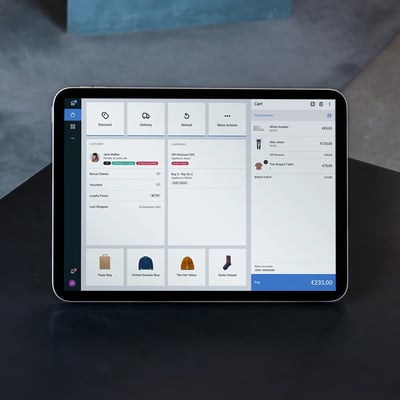
But the thing that always positively baffles customers is how genuinely plug-and-play it is. You jump on a Slack huddle or a Google Meet, and you're live in twenty minutes. People still can't quite get their heads around it, because so many of the things that plug into a POS or an ERP or a payments system are enormously complex. The fact that we can honestly say that to customers is something I've always loved about working with Sitoo.
There's a lot more in the pipeline too. Sitoo are obviously leaders in the Nordics, which is a market we've barely touched, so extending the partnership beyond the UK is really exciting.
And I just love the people. That helps.