What happens when the system your stores have run on for years and years finally starts to give way? How do you get a few hundred people onto something new without leaving anyone behind? And why would you choose to go live right before your busiest season of the year?
To find the answers, it helps to speak to someone who’s just done it.
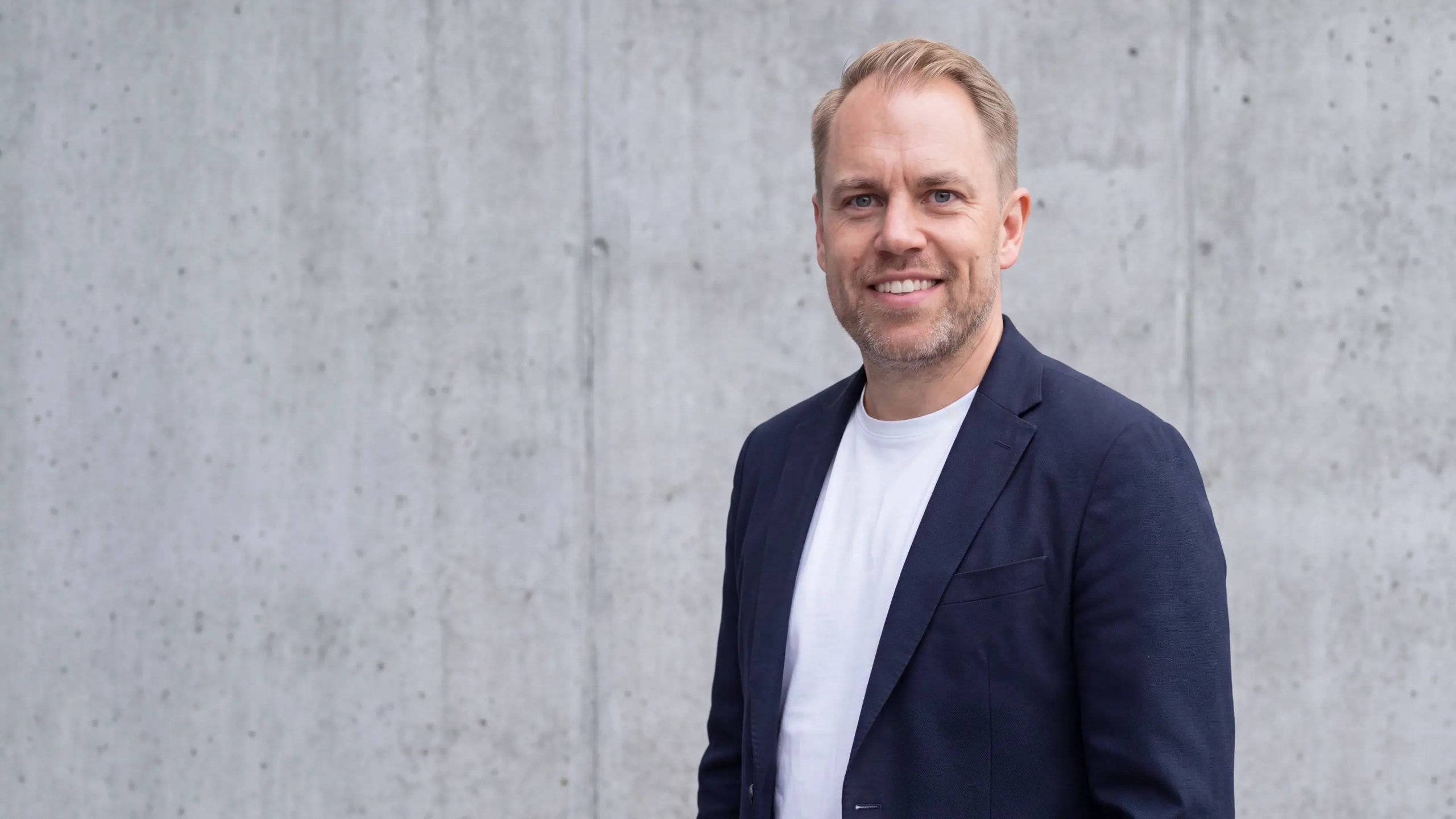
Kenneth Rosenbech is a district manager at Eventyrsport, the Danish outdoor chain founded in Aarhus in 1996 and now the largest of its kind in the country. He’s spent around twenty years in retail and the last nine at Eventyrsport, where a big part of his role is to stay close to the store managers and the people on the floor.
He also came back from parental leave in January 2026 and was asked, more or less immediately, to lead the store side of a new point of sale rollout.
It was the first project of its kind he’d ever run. But thanks to twenty years of knowing how stores actually work, and a very clear view of what would decide whether this succeeded or failed, he was the perfect person for the job.
Because technology was never really the hard part. The hard part was a store network full of people who’d known the old system for years, some of whom had been there long enough to be the person everyone else asked for help.
We talked to Kenneth about why they replaced their legacy system, how they ran the rollout, why he deliberately refused to write a manual, and what he'd tell anyone about to do the same thing.
Kenneth, let's start with you. How did you end up running a point of sale rollout?
Well, this was my first project of this kind. Honestly, I’m not the person to ask about the IT side of things, but I've been a district manager for five or six years now, so I know what the stores, our teams, and our customers need.
As a team of district managers, we have close conversations with our store managers and the teams on the floor, and we see what's happening on a day to day basis.
Looking back, it was a great decision, and it worked great.
Twenty years is a long time in any industry. What do you love about retail?
I love talking to people. I love developing my team and educating them, and I love building the journey a customer has from walking into the store to walking out with something in their hands.
Training people and watching them grow - that's what drives me a lot. I also look after our internal academy, our online training platform, so the e-learning sits with me and the store managers take it onto the floor. For me, this is crucial for retail to be a success but something that often gets overlooked.
How have you seen the industry change over that time?
One of the major things I've noticed is that we want to go back to the kind of service you used to get in a store. The way it might have been in the 50s or 60s, where it was a little more personal. You knew your customers. You knew who walked in, what trip they were going on, what they were doing at the weekend.
We're getting back to that, beyond just selling people products. And I think customers really like it - that sense of familiarity with a store.
You can walk into any store nowadays and buy the same things, and sometimes it is just about the price. But if you want a store that sticks in the memory, and you want people to come in, that relationship with the customer is more important now than ever.
So what does a great customer experience look like for you?
For me, it's acknowledgement and recognition.
It’s when somebody says hi when you walk in. When they ask - How are you? And if you’re a returning customer, they ask you about the trip you’ve been on; they know you went hiking, and they ask about the shoes you bought last time you were in the store.
So it's actually not so much about the selling. It's about talking to our customers, and hopefully getting them to come back. It's giving them advice on how the next trip could be even better, understanding what they want, and trying to make the next trip the best they've ever had.
Let's come to the project. Why replace the point of sale?
Basically, we just had an old system. I think it was thirty years old.
Then last year it began crashing more than it should, and that totally ruins the customer experience. And besides the experience, you also lose money on it.
So it was just time. It had gotten too big, and our servers couldn't handle what we wanted to do. If you want to be agile with what's happening and what customers want, you have to have a system that actually works all the time, and that develops easily.
And we have a lot of staff going in and out. You need to be able to train those people more easily, because you want them on the floor talking to customers - not standing behind the checkout looking at a sheet to work out how to process a return.
What was your first impression of the new system?
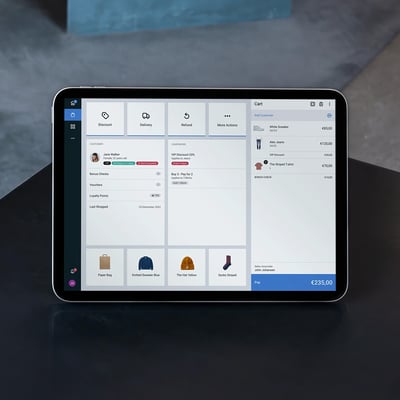
Intuitive. That was the first thing, because I didn't need anyone to explain it to me. I just got an iPad in my hand, and I could basically sell anything. I could take a return and really easily do all those small things you actually do a hundred times a day. You can learn just by standing with it in your hands.
That was my first impression. Then as we got further into it, I understood how much more the system could do, and how much more easily it was to do them than with the old one. Discounts are a good example. We used to have to do a lot of it manually. Now we can set it up per store, with different discount models. I think that's really interesting.
How did you approach the rollout itself?
The goal I had to achieve was getting the staff onto it, at the right pace.
When you launch in each store, some people are really young and tech-minded and know how to use an iPad. But you also have people who know the old system inside out and love being the one that everyone comes to and asks how you do this and that. You need to get those people on the journey as well.
So it was really important for me to say to everyone: we're doing this journey together, rather than leaving people behind.
I talked a lot about the concrete benefits so they could see it for themselves. Okay, I don't need to push a button ten times anymore. I push it twice and get the same result.
And I wanted to help the store managers be the best, so we turned them into super users. I put a lot of time into that presentation and into the super user day, because when they came back, they needed to have had that ‘wow’ experience. They needed to be able to say, "This is going to be great, guys, now let me show you how it works".
And the feedback since going live?
Really good. Once we started the rollout, it took two weeks to get all our stores running the new system.
One of the best impressions came from a store manager who said to me: "Now I only have to train my staff for three hours instead of three days."
That says a lot about the system.
There's something else I did, which was to deliberately not make a guide. I didn't do anything beforehand, because I didn't yet know what the issues out there would be. What do we actually need a guide for? The system is easy enough to learn by itself that I didn't write anything down until I had the feedback.
And honestly, the best feedback is how quickly they adapted. We launched just before summer, which is one of our biggest seasons. So besides taking care of the customers going on vacation, they had to learn a new system.
We didn't lose any customers. We didn't lose any money. We just rolled it out, and it was like we'd had the system forever.
What should good retail technology do?
For us it's that you can just sell anything. You can do web orders from our web page and from the main warehouse. And you've got the small iPad on the floor, so staff don't have to take a customer to the checkout - they can do it right there.
The best tech should help our colleagues on the floor give the best customer experience. And you don't do that if they have a system that's too complicated. It has to be easy and it has to be fast.
Customers always think standing in line to pay is the most annoying time in the world. We've cut that down by a lot. I haven't got numbers on it, but being able to sell things faster makes a lot of difference to the customer experience.
What's exciting about what comes next?
We're very excited to go on to click and collect. We're looking at doing that after Christmas, in the new year.
And all the discount opportunities. Before, we could only do it centrally. Now we can do it in each store - and every store has its own things, their Open by Night evenings, that kind of thing. The models we can build for those are very interesting to look into.
I think it's going to have a major impact on what we can do.
Finally, what are your three tips for someone in the position you were in a year ago?
The first is to take it out on the floor and test it with the people who are actually going to use it every day. I took an iPad out and got questions I didn't have in my mind, about things they walk into every day.
Second, put real time into the super user day. We had two weeks to roll it out, and we needed the store managers to come back with that ‘wow’ feeling and say, this is going to be great. Putting a lot of time into that planning was really important.
And third, transparency. Almost every week, sometimes several times a week, I sent an information email about what was going on, what we were working on, and where we were with the issues people had raised. Actually seeing what's going on behind the system, and seeing that you're taking the feedback seriously - that made a major difference to getting those people on board.
When you've got a few hundred people you need to bring with you, that's what does it.