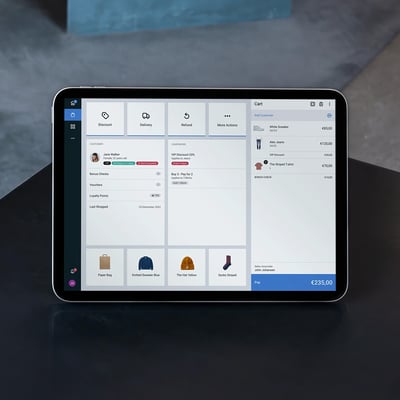

Every great story has a past, a present, and a future.
Retail is no different. The systems we call “legacy POS” have powered some of the most iconic shopping experiences of the last few decades. They helped brands grow, scale, and build loyalty long before “omnichannel” was even a word.
So let’s be clear: the past isn’t bad. Legacy systems still serve a purpose - and for some retailers, they continue to get the job done. And that’s great.
But the world has changed. Shoppers expect instant answers, personalized experiences, and the freedom to move effortlessly between the digital and the physical. And that’s where cloud-native POS comes in.
We’ll admit it - we’re biased. Sitoo is a cloud-native solution. But we’re also retailers at heart, and this isn’t about “old vs. new” for the sake of it. It’s about understanding what’s right for your business today, and where you want to be tomorrow.
Here’s a closer look at both approaches - bear in mind, this isn’t a deep dive, you can get that in our TCO report. Instead, it’s a high-level look at the differences between the two to give you some inspiration.
The difference between Legacy and Cloud-native POS
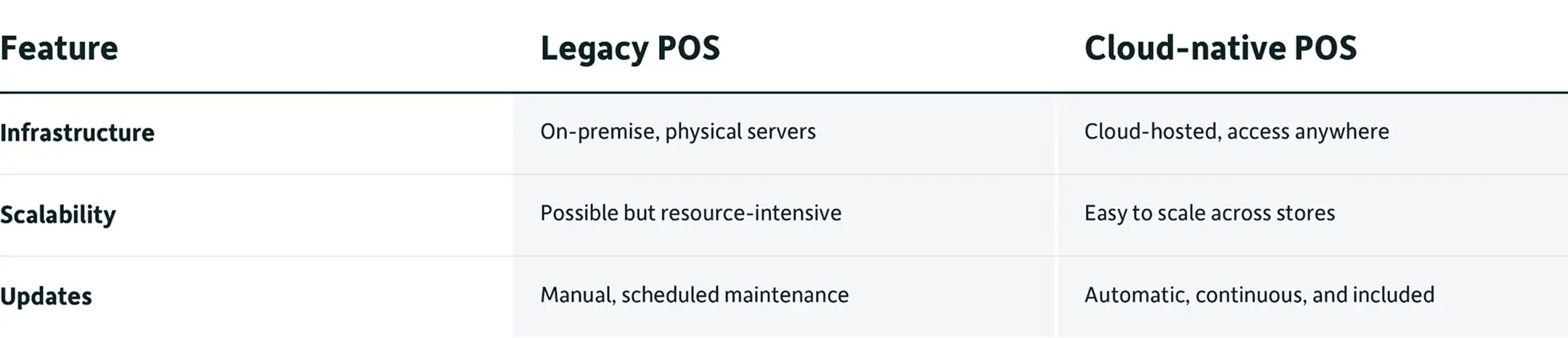
1. The architecture of it all: On-prem vs. up-in-the-cloud
Imagine your POS is a house.
A legacy POS is like a traditional family home. Solid foundations, dependable, but when you want to make changes - like renovating, extending, or modernizing - it can be a bigger job than you first thought.
A cloud-native POS is more like a modern apartment in a smart city. Flexible, connected, and designed for easy upgrades and growth. Updates don’t need heavy lifting - they’re built in from the start.
Both options can work, but if agility and fast scaling are priorities, cloud often gives you the edge.
2. Real-time inventory visibility and a single source of truth
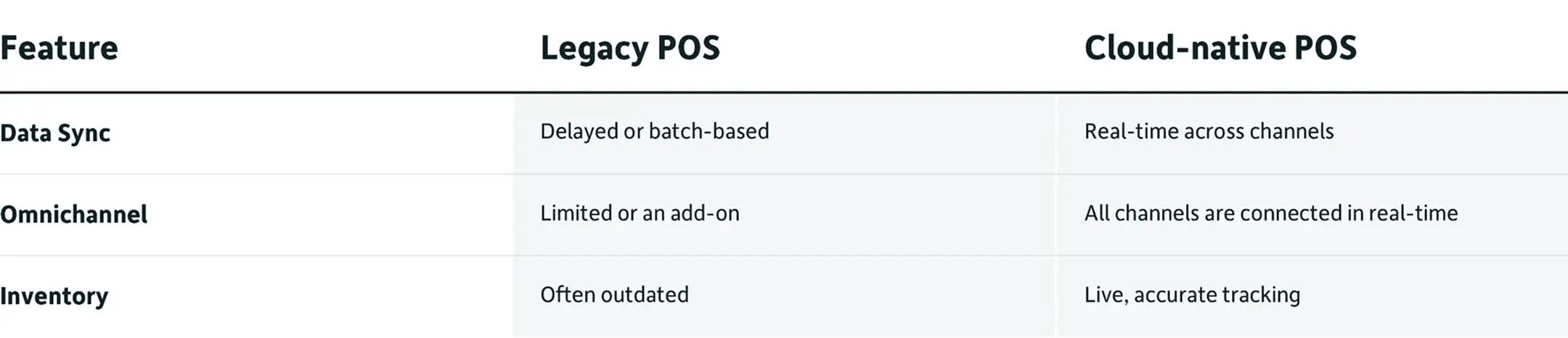
With legacy systems, information can sometimes sit in silos. Inventory data might lag behind reality, making it harder for store associates to answer customer questions on the spot.
Cloud-native POS, on the other hand, is built to sync data instantly across all channels. That means real-time visibility of stock, sales, and customer information, no matter where the interaction happens.
As Bård Kvamme, Retail Director at Norrøna, puts it: “Our store associates are the ones connecting with customers, and it’s essential they’re motivated and equipped with the knowledge they need. The right tools give them the confidence to provide the best customer experience.”
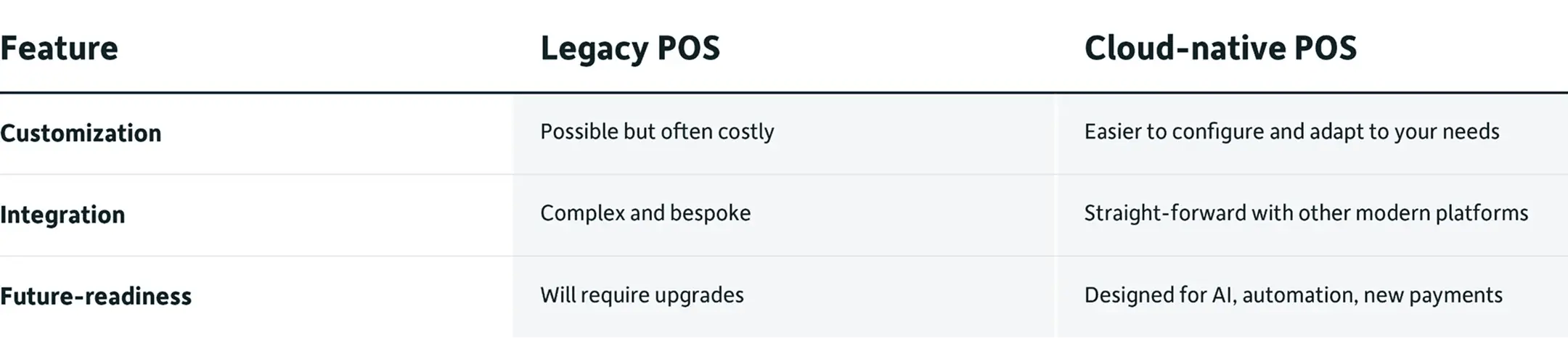
3. Customization & integration: Can your POS play nice with others?
Legacy systems are often built to do many things, but connecting them with new platforms - like e-commerce, CRM, or ERP - can mean extra work.
Cloud-native systems are typically API-first, which makes them easier to integrate with other software. This flexibility gives retailers freedom to adopt a best-of-breed approach, choosing the right tool for each job.
As Maja Aagaard, Head of Digital Development Retail & Georg Jensen at Fiskars Group, says:
Our POS integrates directly with our ecommerce systems, reducing the need for custom development and ensuring data flows seamlessly between channels.
4. Cost & maintenance: Time is money, but so is… money
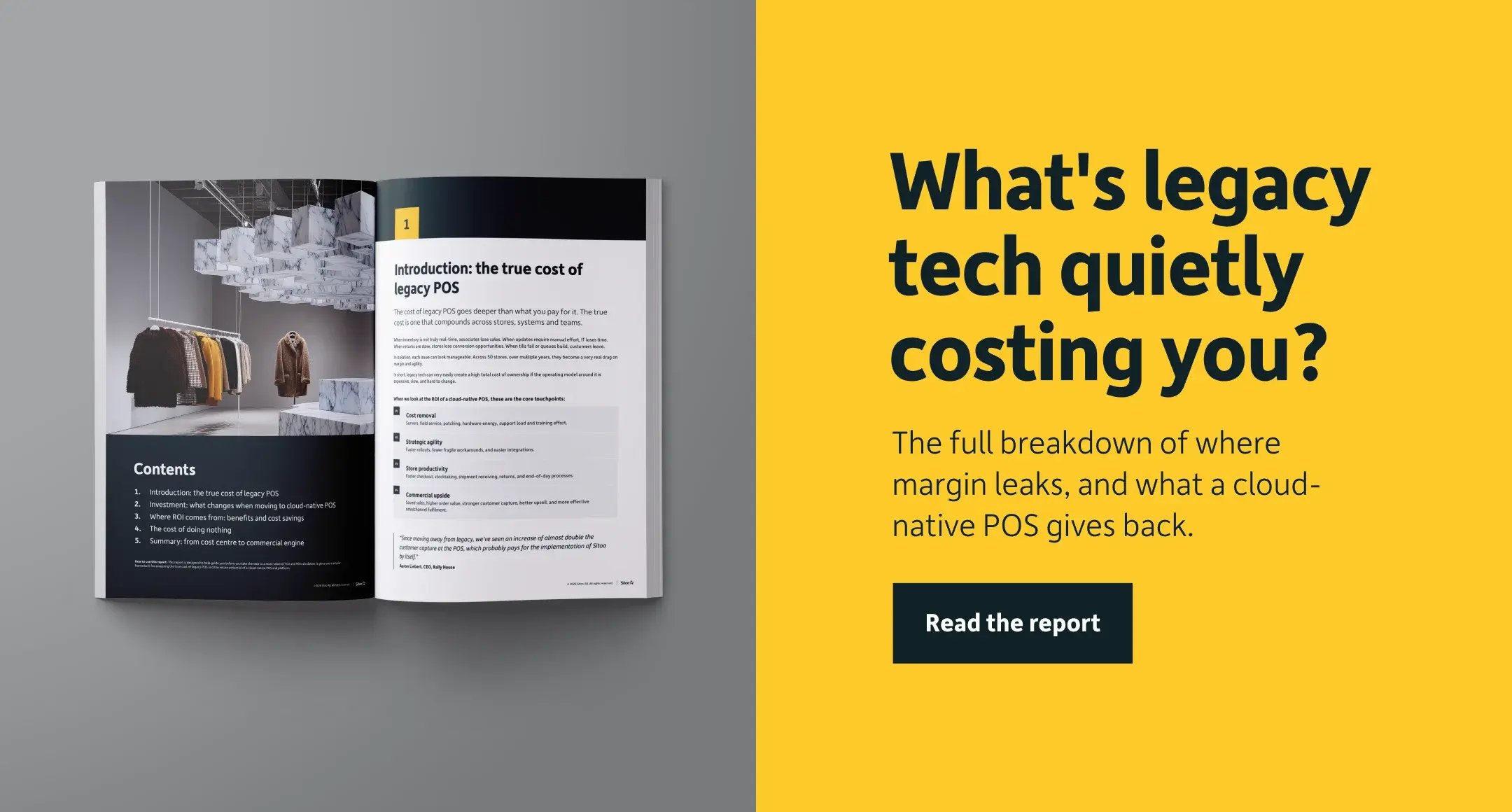
The cost of legacy POS goes far beyond hardware, licensing and maintenance. The real expense is often hidden in the operating model around it: servers, patching, field service, support tickets, energy use, manual workarounds, slow updates and the internal effort needed to keep everything running.
Over time, these costs compound across stores, systems and teams. What looks manageable in one location can become a significant drag on margin and agility across an entire estate.
Cloud-native POS changes the equation. Instead of carrying the cost of local infrastructure and ongoing maintenance, retailers move to a platform model with continuous updates, fewer technical dependencies and a lower operational burden. The result is not just more predictable spend, but a clearer way to compare what your current setup costs to run today against what a modern platform could return.
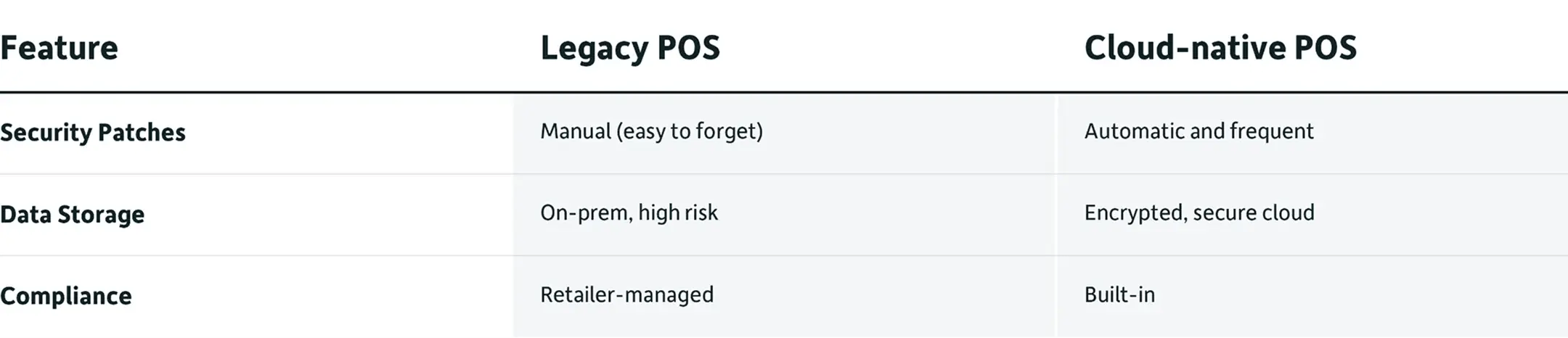
5. Security & compliance: Keeping trust intact
Security is a top priority for every retailer. Legacy systems often require manual patching and updates, leaving room for error.
Cloud-native systems, by design, roll out security updates automatically and come with built-in compliance for standards like GDPR.
6. Continuous development: Growing with you
One area where cloud-native shines is in how updates are shared. When one retailer benefits from a new feature or improvement, it’s rolled out across the platform - meaning everyone gains.
Legacy systems often require bespoke development, which can slow the pace of innovation.

Final thoughts: What’s the best POS for modern retailers?
There isn’t a one-size-fits-all answer. Legacy systems remain a fit for some retailers who value stability and familiarity. But for brands prioritizing growth, agility, and unified customer experiences, cloud-native platforms bring clear advantages.
The real question is: what’s right for your business today - and what will support your vision for tomorrow?
As Mobarak Said, former Head of IT and Digitalization at Illum, says:
The best-of-breed approach is no longer just a trend; it’s essential for any retailer looking to stay competitive in a rapidly changing landscape.
Legacy systems lock you in. They tie you to specific vendors and make you dependent on external consultants for every customization and update. It’s like being on a highway with no exits. Once you’re on, you’re committed, often at a high cost, and the more you invest, the harder it becomes to pivot.”
Take a look at your current setup.
Ask yourself these questions
-
Is your POS helping or hindering your growth?
-
Can you respond fast enough to customer needs?
-
Are your store associates set up to succeed?
-
Want to see what your POS is really costing you?
Legacy POS costs rarely stop at hardware, licences and maintenance. The real TCO is often hidden in support tickets, manual workarounds, slow store processes, infrastructure, missed sales and delayed change.
Download The Great TCO Illusion to learn how legacy retail tech quietly erodes margin - and how cloud-native POS can create measurable returns across revenue, efficiency and cost reduction.
Last updated: september 17, 2026